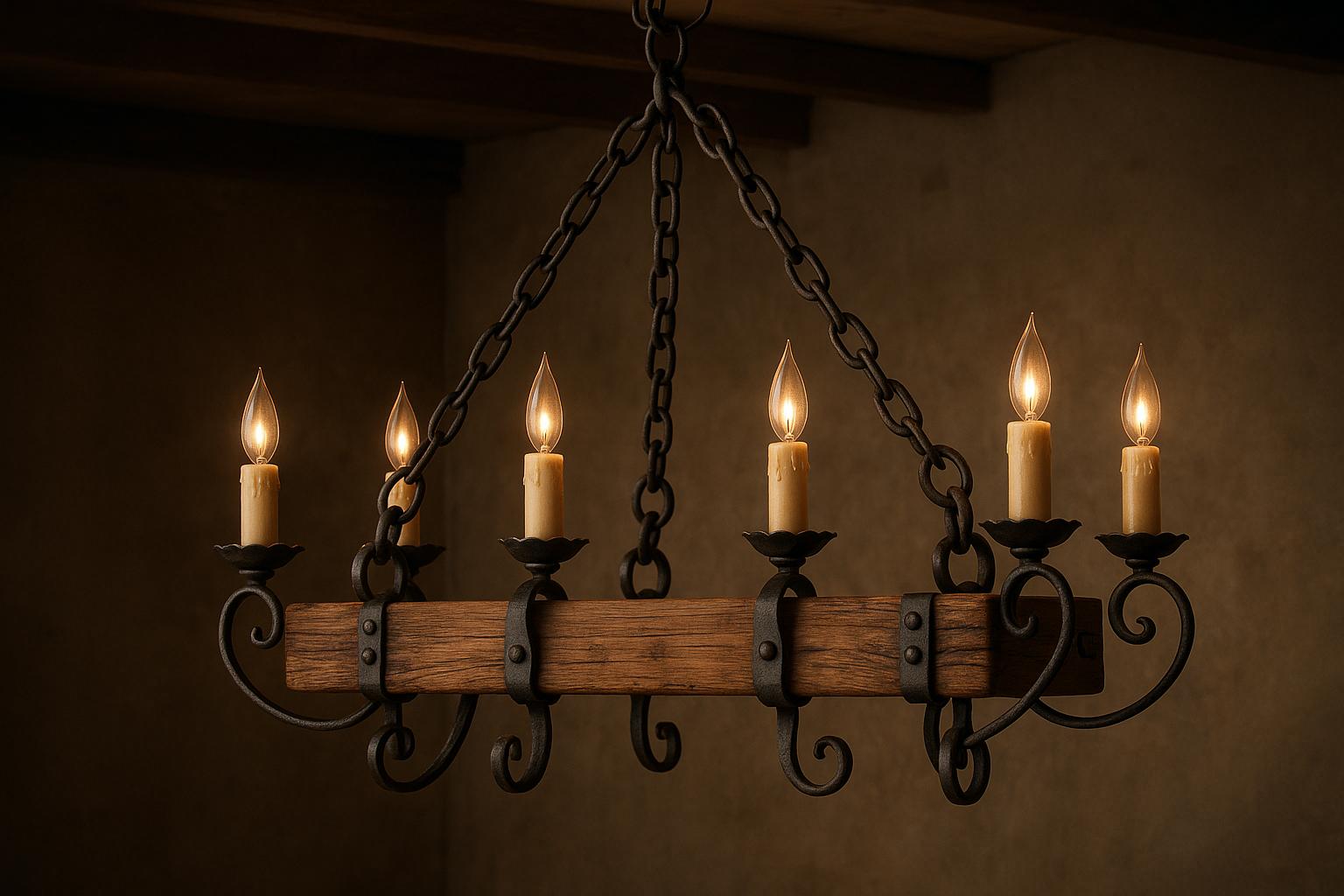
Introduction to Wood and Wrought Iron Vintage Lighting
Wood and wrought iron vintage lighting fixtures offer a distinctive combination of natural warmth and industrial strength. These fixtures offer both functionality and an aesthetic appeal that can enhance the atmospheric quality of various environments. Comprising elements like chandeliers, sconces, and lanterns, they bring an elegant, rustic charm to any decor while being sturdy and enduring.
History and Evolution
The history of wrought iron in lighting stretches back several centuries, with its use entrenched owing to its robustness and workability. Originally, wrought iron was utilized chiefly in creating strong yet intricately designed structural elements. When combined with wood, especially in the crafting of chandeliers, sconces, and lanterns, these materials conjure images of Victorian or Gothic aestheticism. Interestingly, this combination also adapts well to contemporary decor, demonstrating its enduring versatility.
The evolution of this style reflects a broader history of lighting design, as various historical eras have left their imprint on the craft. In medieval times, wrought iron chandeliers symbolized opulence and lit many grand halls. During the 18th and 19th centuries, incorporating wood brought a softer, more inviting aesthetic that complemented iron’s solidity. In modern-day applications, the fusion not only depicts a sense of nostalgia but also meets the demands of contemporary aesthetics by offering nuanced textures and contrasts.
Craftsmanship and Materials
Wood, commonly oak, walnut, or cherry, plays a pivotal part in the creation of vintage lighting fixtures. Its appeal ties back to attributes such as the variety of grain patterns and its longevity, making it a preferred choice for such handiwork. Each type of wood offers a different aesthetic characteristic—not just visually through its grain but also in how the wood ages over time.
Wrought Iron presents a different set of appealing features. Known for its malleability and intrinsic strength, wrought iron’s crafting process involves heating and forging to achieve complex and beautiful forms. The malleability allows artisans to imbue each piece with individual character, creating fixtures that range from minimalist to extensively ornamented designs.
The fusion of these two materials epitomizes craftsmanship. Artisans who engage in these crafts often employ historical techniques honed over generations, ensuring each fixture reflects both innovation and tradition.
Styles and Designs
Wood and wrought iron vintage lighting fixtures are diverse, catering to various tastes and functional needs.
Chandeliers: The chandelier frequently serves as a focal point in a room. With wood and wrought iron as foundational materials, the styles range from minimalist, clean-lined designs to intricate pieces filled with scrollwork and embellishment. Depending on the setting, a chandelier can effectively convey either luxury or simplicity.
Sconces: As functional as they are decorative, wall sconces cast ambient light in a room, enhancing the mood. The use of wrought iron and wood in these fixtures is especially effective in producing intricate designs. These designs not only stand as visual art but also play with light and shadow to create compelling atmospheres.
Lanterns: Serving as versatile lighting options, lanterns manifest both indoors and outdoors, embracing the cozy glow they offer. The craftsmanship in wood and wrought iron lanterns highlights their capacity to imbue spaces like entryways or gardens with warmth, reinforcing their inviting glow.
Applications and Integration
The adaptability of wood and wrought iron lighting lends itself to various settings—from homes to commercial establishments. In residential spaces, these fixtures can bring out the character of rustic or farmhouse settings and equally add subtly textured contrasts to modern environments. Their appeal lies in their ability to blend and enhance, making them suitable for new constructions as much as for renovation projects.
In commercial environments, they do more than just provide illumination. In places such as restaurants, cafes, or boutiques, these fixtures can aid in crafting an ambiance that leaves a lasting impression on customers. They can encapsulate the theme or character of a venue while offering practical lighting solutions.
Maintenance and Care
Ensuring the longevity of wood and wrought iron lighting fixtures hinges on regular care and maintenance. Attention to detail here means these items’ timeless charm continues unfaded over time.
Cleaning wood components involves gently wiping them with a soft cloth. An application of furniture polish helps maintain the wood’s rich finish. Wrought iron elements benefit from regular dusting and periodic cleaning with a mild soap solution to stave off rust. Additionally, a thin layer of wax applied to the iron can guard it against moisture, preserving both the aesthetic and structural integrities.
Routine maintenance not only maintains the aesthetic appeal but also ensures these fixtures continue to function safely and effectively.
Conclusion
The allure of wood and wrought iron vintage lighting arises from its striking juxtaposition of aesthetics, function, and durability. These fixtures are more than just light sources; they are integral components that contribute a rich historical character to the spaces they inhabit. Their capacity to complement various styles ensures their relevance, whether integrated into new constructions or as part of rejuvenating existing decors. In embracing these elements, one taps into a lineage of design that holds steadfast through the ebb and flow of architectural trends.