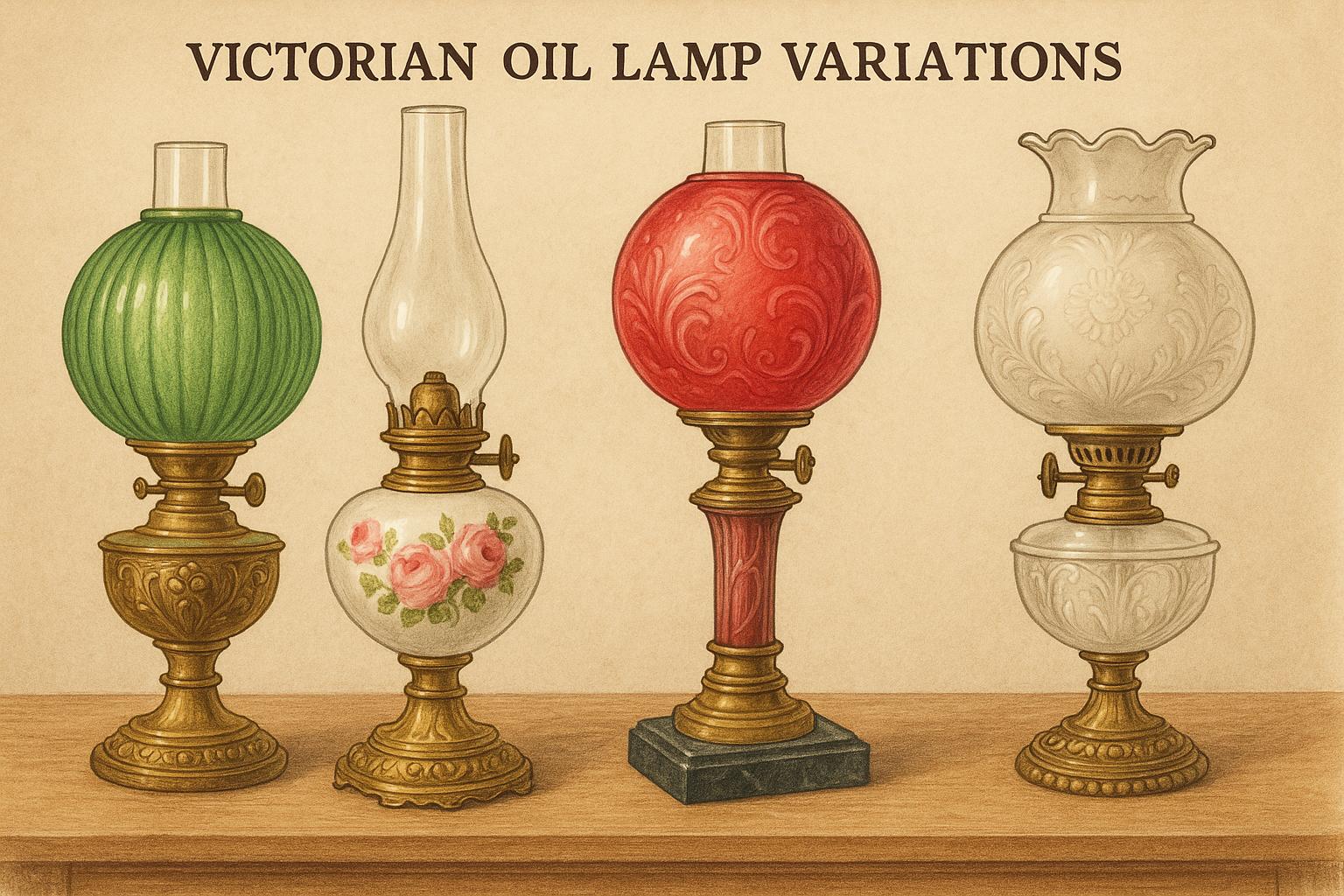
Introduction to Victorian Oil Lamps
During the Victorian era, which spanned from 1837 to 1901, oil lamps were an essential part of daily life, providing the primary source of artificial lighting. Over time, these lamps evolved both in functionality and design. This article explores the various types of Victorian oil lamps and their distinct features.
Types of Victorian Oil Lamps
The Victorian period saw the emergence of several different types of oil lamps, each serving unique purposes while adhering to the aesthetic sensibilities of the era. Understanding these variations provides insights into the technological advancements and cultural nuances of the time.
Argand Lamps
One of the most notable innovations during this period was the Argand lamp, invented by Swiss physicist Aimé Argand. These lamps were renowned for their improved light output, which was significantly brighter than traditional oil lamps. The Argand lamps used a circular wick that allowed air to flow from both the inside and outside, greatly enhancing combustion efficiency. The circular wick design improved not only the brightness of the light but also allowed for a more even distribution of light, which was highly desirable for tasks such as reading or writing. Additionally, the increased efficiency meant that the oil consumption was reduced, offering a cost-effective lighting solution during the time.
Moderator Lamps
The moderator lamps were another Victorian innovation, designed to address the issues of inconsistent flame and frequent wick trimming associated with earlier versions. These lamps featured a constant spring mechanism that controlled the flow of oil to the wick, ensuring a steady light source. This innovation marked a significant advancement in oil lamp technology during the Victorian age. The innovation reflected the Victorian era’s focus on improving daily life through technology. The constant flame provided by moderator lamps meant that people could rely on a stable light source for longer periods, which was crucial in an age where extended hours of working and social activities became the norm.
Sinumbra Lamps
Sinumbra lamps, named for the Latin term meaning “without shadow,” represented a sophisticated design unique to the Victorian era. These lamps had a glass ring shape, allowing light to project evenly over the surface, thereby minimizing shadows. The decorative appeal of these lamps made them popular in Victorian households where both function and aesthetics were prized. Sinumbra lamps were often found in dining rooms or parlors where people gathered, emphasizing the social nature of lighting in Victorian homes. The lamp’s design not only provided practical lighting but also added an element of elegance to the room, often reflecting the homeowner’s status and taste.
Decorative Aspects of Victorian Oil Lamps
Apart from their functional evolution, the Victorian oil lamps were also marked by elaborate decorative features. The era’s penchant for ornamentation was visible in the lamp bases, which were often crafted from materials such as brass, bronze, and porcelain. Many lamps featured intricate engravings and designs that ranged from floral motifs to intricate geometric patterns. The glass shades were often adorned with decorative etchings or colored to complement the interior decor. Such decorations were not merely superficial but represented the cultural and economic standing of the household. The use of high-quality materials and intricate designs often showcased the craftsmanship of the artisans, reflecting the Victorian belief in the fusion of function with beauty.
Fuel Sources
The primary fuel for these lamps was whale oil during the early Victorian period. However, with the rise of petroleum and gas refining, kerosene became a popular alternative, offering a more efficient and cost-effective solution. This transition from whale oil to kerosene was pivotal in improving the accessibility and functionality of oil lamps throughout the Victorian era. Kerosene’s introduction marked a significant shift not only in the technology of the lamps themselves but also in the socio-economic fabric of the time. As kerosene was more readily available and less expensive, it democratized lighting, making it accessible to a broader segment of the population. This also paralleled other industrial advancements of the time where efficiency and mass production started transforming society.
Conclusion
Victorian oil lamps not only shaped the everyday lives of people during the era but also reflected the period’s technological and artistic advancements. The variations in design and function underscore the ingenuity and adaptability of the time, providing a fascinating glimpse into the past. Understanding these lamp types enriches our appreciation of both the technological progress and aesthetic preferences that characterized the Victorian age. The Victorian era, often noted for its significant shifts in society, technology, and culture, can be examined through the evolution of its oil lamps. The move from simplistic designs to more complex and ornate versions mirrors the broader societal transformations of the period. Moreover, these lamps served as more than just lighting devices; they were a reflection of the changing economic conditions and artistic sensibilities. By examining Victorian oil lamps, one can gain insights into how technological advancements were interwoven with daily life, enhancing both functionality and aesthetic. The legacy of these lamps is evident today, as they continue to inspire modern-day lighting designs and remind us of a time when every advancement was a step toward a brighter future. The evolution of Victorian oil lamps is indeed a testament to human innovation and the persistent pursuit of progress.