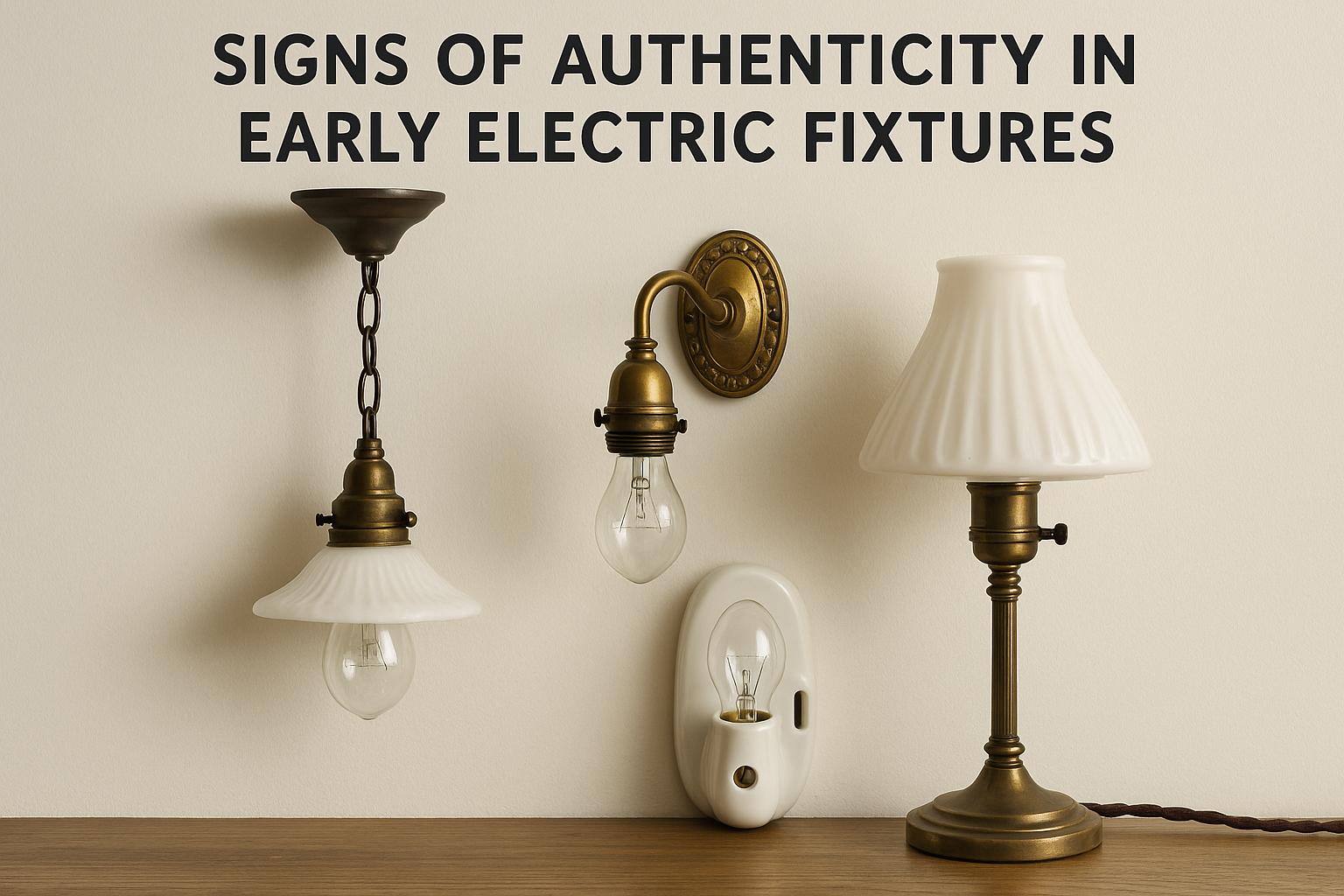
The Emergence of Electric Lighting
Electric lighting came to the forefront as a revolutionary technology at the close of the 19th century. Before electricity, gas and oil lamps illuminated homes and public spaces. The shift to electric lighting completely transformed not only the methods of illumination but also the fixtures and fittings used alongside them. This change wasn’t merely technological; it was also a cultural shift, ushering in new designs that reflected the outlook of a modern era.
Understanding the Materials and Craftsmanship
The materials and construction techniques of the time were pivotal to the authenticity and lasting beauty of early electric fixtures. Metals such as brass, bronze, and iron were favored for their ability to be molded and designed into complex patterns, providing both robustness and aesthetic value. These metals withstood the test of time, often showcasing a patina, which is a thin, colored layer that develops on the surface through oxidation or aging. This patina adds a dimension of historical depth to the fixture, elevating its appeal to collectors and historians when the aim is to acquire authentic pieces.
The craftsmanship of the era is often evident in the details of the fixture. Artisans of the time invested considerable effort in each piece, creating hand-forged designs that are rarely replicated in modern mass-produced items. Each curve, floral detail, or linear engraving on the fixture tells a story. It reflects the care and precision characteristic of the artisans who created them. Conversely, reproductions tend to lack this depth due to the heavier reliance on automated production, resulting in uniformity and the absence of those small imperfections that mark genuine handiwork.
The Edison Screw Socket and Evolution of Bulb Technology
The advent of the Edison screw socket was a formidable leap in the evolution of electric fixtures. The invention of the screw socket by Thomas Edison in 1880 represented not only a leap forward in technology but also set the stage for the development of a standard in lighting. Authentic vintage fixtures often hold original sockets that showcase specific features, such as patent dates and manufacturer’s logos, which are often engraved or stamped into the metal. These markings are more than just practical; they are historical signatures that allow historians and enthusiasts to trace back the fixture to a specific time or manufacturer.
Original Wiring Systems
The internal wiring of these fixtures is another critical aspect of their originality. Early electric lighting systems used cloth-covered copper wiring, a feature easily distinguishable from today’s plastic-covered copper wires. Although these original wiring systems often require updating for safety reasons, their presence in a piece can indicate its age. The cloth coverings often had a woven texture, usually designed to match or complement the fixture’s aesthetic, indicating the holistic design thought put into these early electric installations.
Aesthetic Identities Through Design Movements
The design era of a fixture can often pinpoint its authenticity and origin. Several movements influenced the development of electric fixtures, including Art Nouveau, Arts and Crafts, and Art Deco. These movements played pivotal roles not only in shaping artistic expressions of the time but also influencing practical designs seen in lighting fixtures. For example, Art Nouveau was known for its flowing, intricate lines and nature-inspired motifs, while Art Deco brought geometric shapes and symmetrical designs into vogue.
An examination of details such as engraving, filigree, and glasswork can unveil the origin and style period of a piece. Hand-crafted glass elements, whether blown or cut, imbue each fixture with a unique character. Slight variations and irregularities in these components are signs not of defect but of authenticity, reflecting the individuality inherent in hand-crafted items.
The Role of Patents and Maker’s Marks in Establishing Authenticity
Patents and maker’s marks serve as invaluable resources for determining provenance and authenticity. Historical records can often be linked to these identifiers, providing further context and certification of a piece’s authenticity. Engravings detailing patent numbers or trademarks offer more than just proprietary information—they cement the fixture’s place in history.
Maker’s marks can often lead enthusiasts on a historical journey, offering insight into the fixture’s creation and the technological advancements of the period. These identifiers can guide collectors in verifying the originality and historical value of a piece, contributing to its significance and value to both collectors and historians.
A Concluding Reflection on Early Electric Fixtures
Early electric fixtures are more than just functional items; they are artifacts that embody the artistry, vision, and technological progress of their eras. By studying the details that signify authenticity, from material choices and crafting techniques to distinctive style elements and historical inscriptions, we gain a richer appreciation for these pioneering inventions.
Whether one approaches early electric fixtures from a prescriptive historical viewpoint, a collector’s passion, or an artistic interest in their design, knowing how to assess their authenticity enriches the experience. It allows enthusiasts to connect more intimately with the complex narrative of technological progress and artistry that these fixtures represent, preserving the legacy of the first wave of electrified lighting.