Understanding Glass Etching
Glass etching is a fascinating art form that involves the creation of designs on the surface of glass through various methods. This technique has an extensive history and has been employed for centuries to enhance the aesthetic appeal of glassware, windows, and other transparent surfaces. Whether used in traditional or modern designs, glass etching allows for intricate detailing that adds a refined touch to glass objects, making them a centerpiece of decoration in various settings.
Techniques Used in Glass Etching
Glass etching can be achieved through several techniques, each offering unique results and suited for specific types of projects. These methods offer artists and craftsmen the flexibility to choose according to the nature of their work and the desired outcome.
Abrasive Etching: Known as sandblasting, abrasive etching involves the projection of abrasive grit on the glass surface. This method is particularly effective for large-scale projects as it creates deep textures and patterns. The use of sand or other abrasives can craft striking designs onto the glass, transforming simple glass surfaces into pieces of art.
Acid Etching: In this method, the application of hydrofluoric acid to the glass surface forms smooth, frosted finishes. Due to the acid’s corrosive properties, it requires careful handling and safety measures. This technique allows artisans to achieve precise and intricate details, making it a preferred choice for complex designs.
Laser Etching: A modern advancement, laser etching uses high-frequency laser beams to etch designs onto glass. This method provides excellent precision and is ideal for producing detailed, customized artwork. Laser etching enables the reproduction of complex patterns and images, allowing for personalization in artistic works.
Vintage Shades in Glass Etching
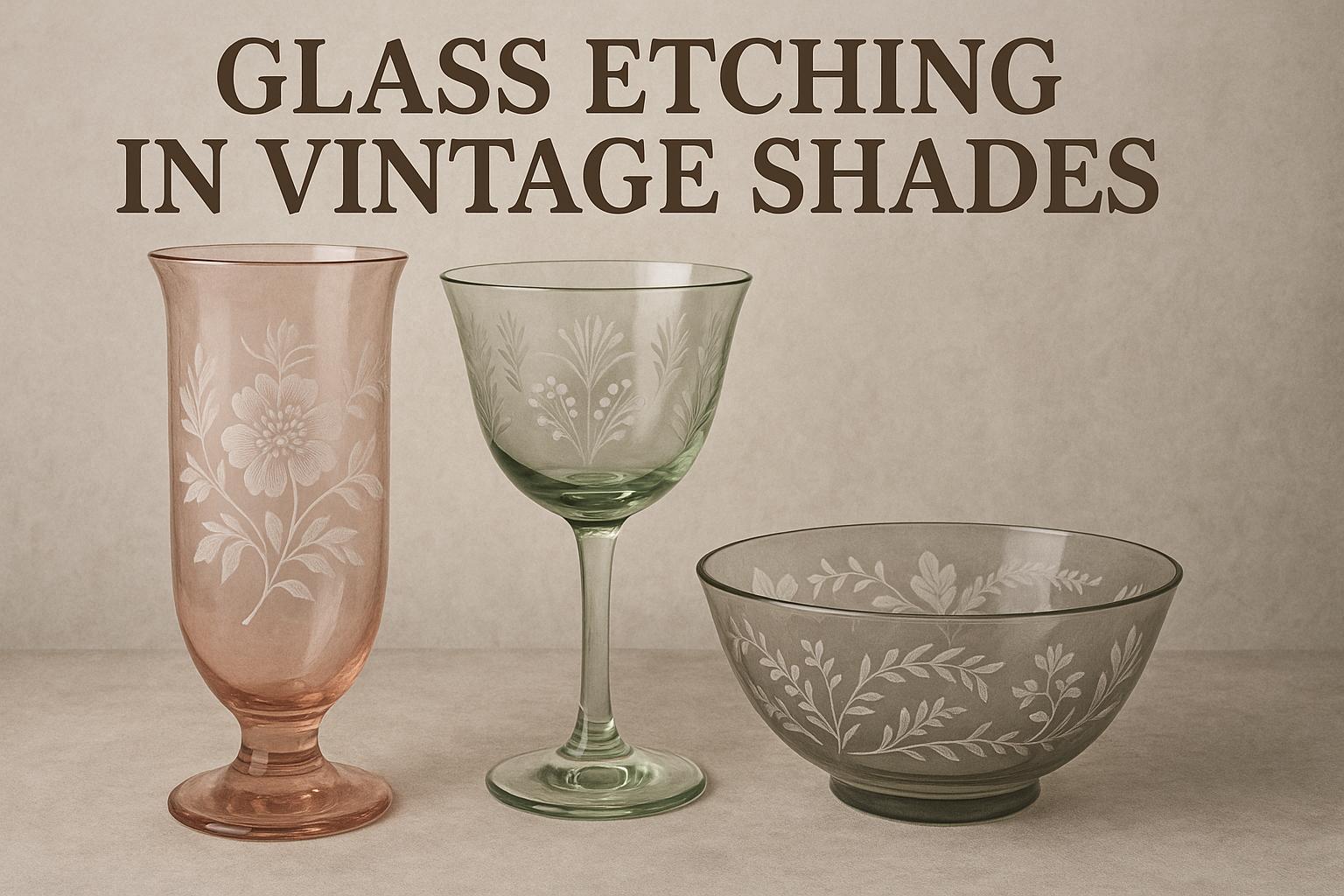
Incorporating vintage shades in glass etching can provide a classic and timeless look to glass items. This approach is especially appealing for its ability to evoke a sense of nostalgia and historical charm, often achieved through a muted color palette.
Color Selection: Traditional vintage etching employs colors such as muted blues, sepias, and greens, which create a nostalgic aesthetic indicative of the past. These colors can be achieved by using painted finishes or layering colored glass, offering a unique and personalized touch to etched glass pieces.
Design Elements: Vintage glass etching often features floral patterns, geometric shapes, and cameo embellishments. Such designs draw inspiration from architectural and artistic movements like Art Deco or the Victorian era, delivering a period-authentic appearance that is both elegant and sophisticated.
Application: This technique is ideal for antique restoration or creating new items with a vintage flair. Vintage glass etching is frequently applied to décor items, tableware, and architectural elements, where it imbues grace and character.
Historical Context of Glass Etching
The history of glass etching dates back to the 15th century. However, it gained significant popularity during the 19th and early 20th centuries as glass production and decorative techniques advanced. During this time, the exploration of new styles and methods, including chemical and mechanical etching processes, enriched the art form. The emphasis on elaborate design during these periods made glass etching a sought-after craft, contributing to the creation of decorative glassware that is highly valued by collectors today.
Maintaining Etched Glass
Preserving the beauty of etched glass requires proper care and maintenance, ensuring the longevity of the intricate designs and textures.
Avoid Abrasive Cleaners: To maintain the delicate details of etched glass, it is important to use non-abrasive cleaners and soft materials for cleaning. Using harsh substances can damage the surface, dulling the etched patterns.
Handling with Care: Etched glass should be protected from harsh temperatures and careful handling to avoid damaging the texture and design. The fragile nature of etched glass demands a certain level of care, ensuring that its artistic qualities are preserved over time.
The result of proper care is not only the preservation of the functional utility of the etched glass but also the enduring aesthetic beauty it offers. These pieces, whether they serve practical purposes or are used for decoration, become part of a legacy that blends historical allure with contemporary craftsmanship.
As we continue to integrate vintage shades and traditional design elements with modern techniques, glass etching remains a cherished art form. It stands as a testament to the timeless beauty and versatility of glass as a medium for artistic expression. The enduring appeal of glass etching lies in its ability to merge past and present, creating works that honor history while embracing modern possibilities. Through glass etching, that creative exploration continues, enriching our environments with pieces that are as functional as they are beautiful.