The Importance of Lighting in Midcentury Interior Design
Midcentury interior design, spanning from the mid-1940s to the late 1960s, is characterized by its simplicity, functionality, and elegant use of materials. One of the often overlooked but crucial elements of this design style is lighting. Lighting not only serves a practical purpose but also plays a significant role in setting the mood and atmosphere of an interior space.
Conceptual Foundations
The midcentury design movement coincided with significant advancements in lighting technology and the availability of new materials like plastic, which allowed for greater creativity in lighting design. Designers during this period embraced the idea that lighting should be both functional and aesthetically pleasing, often integrating fixtures as key focal points in a room.
Materials and Technology
Lighting in midcentury interiors often incorporates materials such as glass, metal, and wood, creating a harmonious blend with the other design elements. The use of new materials like acrylic and Plexiglas became popular, allowing for innovative and futuristic designs. Technological advancements allowed for the creation of more varied and adjustable lighting, contributing to the dynamic atmospheres typical of midcentury spaces.
Glass adds an element of transparency and lightness to lighting fixtures, often being used to create elegant lamp bases or shades. It is this use of glass that allows light to diffuse softly, thereby creating a welcoming aura in interior spaces. Metal, on the other hand, provides both sturdiness and a modern flair, being used often in the framing or accents of light fixtures. Whether in polished chrome or muted brass, metal provides different textural experiences that are visually appealing. Wood, an enduring material in interior design, imparts warmth and a sense of familiarity, usually being incorporated into lamp bases or even frames for some pendant lights.
The technological innovations of that era opened up a plethora of options for lighting design. Expanded possibilities for adjustable lighting designs meant that fixtures could be manipulated to suit different needs or moods. Similarly, advances in bulb technology ensured that lighting could be used to offer functional as well as mood-enhancing illumination. The ability to adjust not only the brightness but also the direction of light allowed homeowners to craft both open and intimate spaces within the same room by simply altering the lighting focus.
Types of Lighting Fixtures
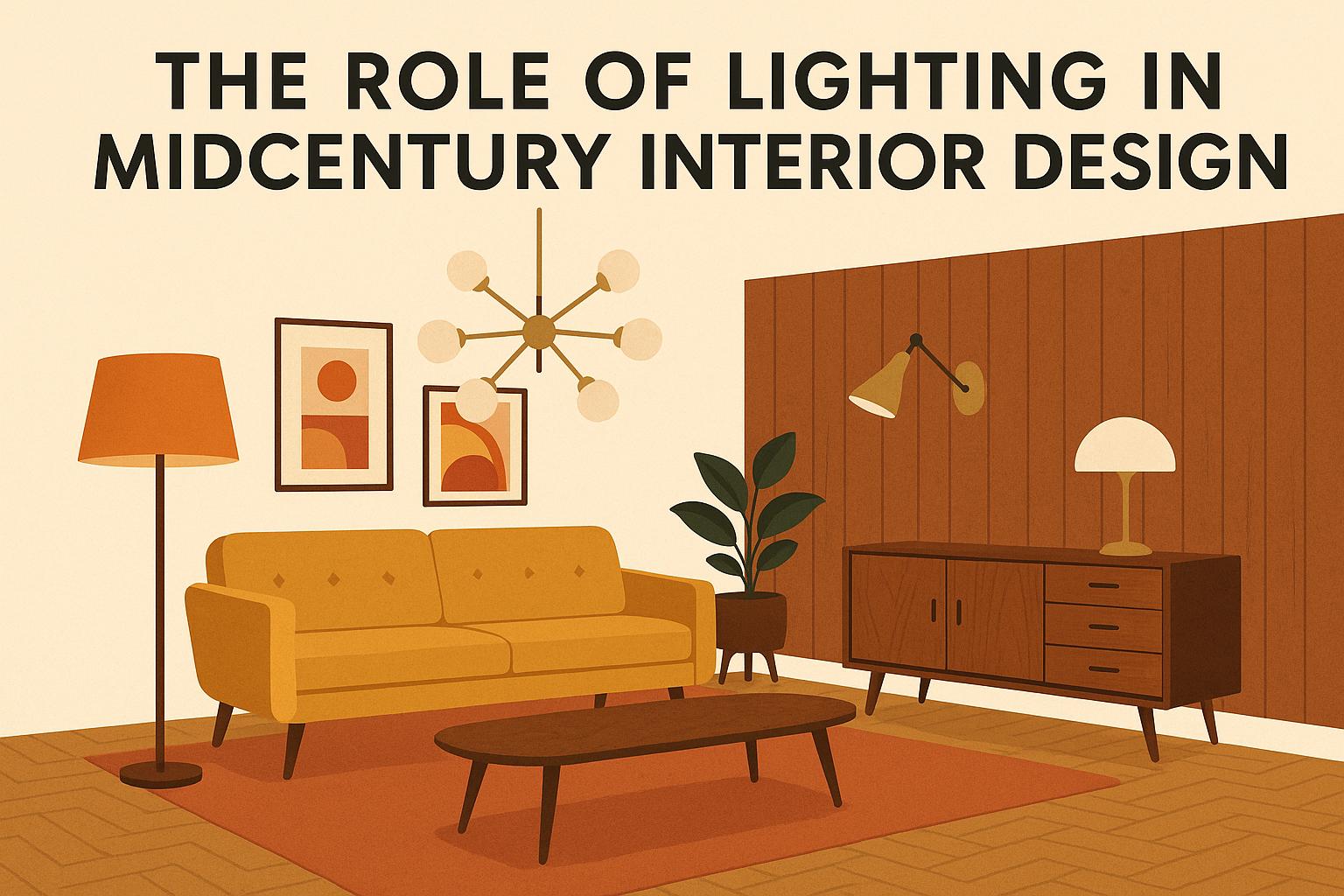
Chandeliers and Pendants: These fixtures often serve as the centerpiece in a midcentury room, featuring bold designs and interesting geometric shapes. They are crafted to catch the eye and add a sculptural element to the space. Midcentury chandeliers are often defined by their intricate designs and materials, which range from sleek metals to stunning glass orbs. Pendants, with their verticality and potential for clustering, provide multiple points of interest and contribute to layered lighting effects. They can be installed at varying heights to either create uniformity or add dynamism to the room.
Lamps: Table and floor lamps in midcentury interiors are usually characterized by sleek lines and organic shapes. They often use materials like teak or brass and provide a warm glow to soften the room’s ambiance. This softer light contrasts with overhead lights, creating a more relaxed atmosphere. The slender profiles of these lamps make them versatile additions to any room, complementing rather than overwhelming the surrounding elements. Designers cleverly used lamps to introduce color and pattern into a room through their shades, subtly altering the light and adding to the overall design scheme.
Sconces and Wall Lamps: These are commonly used to highlight architectural features or artworks. Their designs range from minimalist and functional to more elaborate and decorative, preserving a clean line silhouette typical of the midcentury style. Wall lamps serve both functional and aesthetic purposes, illuminating art or architectural details effectively without the need for bulky installations. Their strategic placements enhance the depth and dimension of spaces, demonstrating the marriage of function with form that midcentury design celebrates.
Design Principles
Midcentury lighting design centers around a few core principles, including functionality, balance, and integration. Light fixtures are thoughtfully placed to ensure the room’s overall design is cohesive. The emphasis is often on creating an ambient light level to make the space inviting and comfortable, while strategically placed task lights ensure practicality.
Light isn’t just something functional in midcentury design; it is a design element in itself. Whether maintaining focus on a particular spot or creating soft ambient light throughout, the principles of midcentury lighting design align with its wider ethos — simplicity and utility accompanied by an understated elegance. This essence is captured in how different types of lighting are layered and combined to support both form and function without compromising the design’s clean lines and open spaces.
Color and Light
Warm light, typically produced by incandescent or halogen bulbs, is favored in midcentury interiors. This type of lighting complements the neutral and earth-toned color palettes that are often used. It enhances the warmth of natural wood furniture and adds a welcoming glow to the space.
A focus on warmer lighting isn’t accidental. The ambiance created by such lighting ties into the social elements of the midcentury modern home — homes meant for entertaining, gathering, and relaxation. Warm lighting softens the modern, often minimalist, design elements characteristic of this design period, making spaces feel more comfortable and accessible. Coupled with color schemes that feature earth tones and neutrals, the lighting ensures spaces look lived-in and inviting rather than stark.
Conclusion
Lighting is a vital component of midcentury interior design, not just in terms of utility, but as an essential contributing factor to the style’s characteristic aesthetic. Whether through the innovative use of materials, the integration of form and function, or the strategic placement within a space, lighting effectively defines and enhances the midcentury design ethos. Understanding its role is key for anyone looking to authentically recreate or appreciate this iconic style.
In comprehending this style, attention should be given not just to the fixtures themselves but also how they interact within a space. The design principle that a home or space should be a seamless blend of form and function is exemplified in its lighting schemes. Each fixture, bulb choice, and placement aligns with this overarching design belief that form should never trump function, and vice versa. As you venture into exploring or recreating midcentury interiors, paying close attention to lighting choices will not only illuminate your path but also enrich your understanding of this design style’s enduring allure.